Praise the Lord Embroidery Design: A Designer’s Review
As a designer who has spent countless hours digitizing patterns and troubleshooting machine tension, I approach every new machine embroidery design with a critical eye. It is not enough for a pattern to look good on a screen; it must perform under the needle. Recently, I evaluated the Praise the Lord Embroidery Design to determine its viability for real-world applications. This piece falls squarely into the Religion category, yet its whimsical execution offers a fresh take on traditional faith-based motifs. My goal was to assess whether this design could hold up in a professional setting, from custom apparel to boutique home decor.
First Impressions and Visual Personality
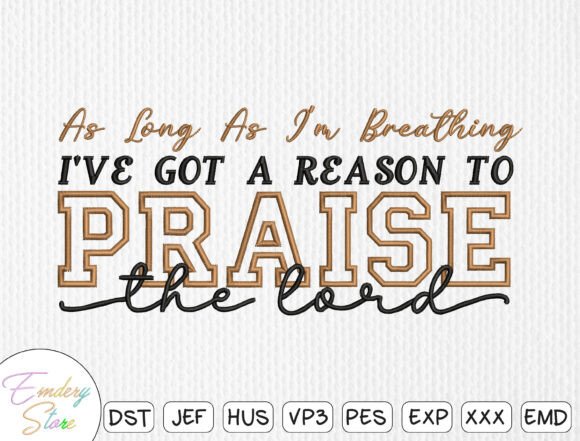
The first thing that strikes you about the Praise the Lord Embroidery Design is its approachable charm. Unlike rigid, formal religious iconography, this design leans into a fun and whimsical aesthetic. The layout feels balanced, avoiding the clutter that often plagues smaller digital files. For an embroidery designer, this clarity is crucial. It suggests that the digitizer considered stitch flow and direction, which directly impacts the final look of the finished product.
The mood created by this piece is uplifting and gentle. It does not shout; rather, it invites a smile. This makes it versatile. It is not limited to Sunday best garments but extends comfortably into everyday wear and home accents. When I visualized this as part of a larger collection, it felt like a strong candidate for spring collections or Easter-themed releases, though its neutral warmth allows for year-round use.
Real-World Application: The Tote Bag Test
To truly understand how a design performs, you must imagine it on fabric. I mentally placed the Praise the Lord Embroidery Design on a canvas tote bag, a staple item for many Etsy sellers and small shop owners. Canvas provides a stable base, allowing the stitches to sit flat without sinking into the weave. In this scenario, the design acts as a focal point. The whimsical touch brings personality to an otherwise plain item, increasing its perceived value as a handmade product.
Beyond tote bags, consider custom apparel. A sweatshirt embroidery project benefits from designs that are not overly dense, preventing the fabric from puckering. This design appears to have a moderate stitch density, making it suitable for cotton blends and fleece. For baby embroidery, such as on a onesie or burp cloth, the soft lines of the design align well with the delicate nature of infant items. Parents often seek personalized gifts that convey faith without being severe, and this design hits that mark perfectly.
Fabric Considerations and Technical Challenges
While the design is charming, practical application requires caution regarding fabric choice. Textured fabrics can obscure fine details. If you are using a terry cloth towel or a thick knit, ensure that the smaller elements of the design do not get lost in the pile. In such cases, using a cutaway stabilizer is non-negotiable to maintain shape integrity after washing.
Thin or stretchy fabrics present another challenge. If you plan to use this on a lightweight t-shirt, a hoop size that matches the design dimensions closely will help minimize distortion. You must also consider the thread colors. High contrast is essential for readability. Testing the design on both light and dark fabric backgrounds is a smart move. On dark fabrics, you may need to adjust the underlay or add a satin stitch border to make the design pop against the background.
Curved surfaces, such as caps or hats, require careful hooping. The Praise the Lord Embroidery Design should be centered precisely to avoid wrapping around the curve awkwardly. For embroidered patches, which are increasingly popular among craft business owners, this design would need to be scaled appropriately to ensure that tiny lettering or intricate corners remain sharp and do not merge into a blob of thread.
Commercial Viability for Small Businesses
For the Etsy seller or creative entrepreneur, the commercial potential of this design is significant. Faith-based products have a loyal customer base, but the market is saturated with generic options. The unique, whimsical style of this embroidery file offers a point of differentiation. It fits well within niche markets such as holiday embroidery for Easter baskets or baptism gifts.
When creating printable mockups for your online store, this design photographs well. Its clean lines translate effectively into digital previews, helping buyers visualize the final product. Whether you are selling finished items like aprons and pillow covers or offering custom apparel services, the design adds a layer of professionalism. It signals to the buyer that attention to detail was paid, fostering trust and encouraging engagement.
However, before listing items, you must confirm licensing terms. Not all digital embroidery files allow for unlimited commercial use. Check the specific license associated with this design to ensure you are compliant when selling finished products or using it in client projects. This step is vital for maintaining the integrity of your craft business and avoiding legal issues down the line.
Designer Notes for Best Results
To ensure the best outcome with the Praise the Lord Embroidery Design, follow these practical steps:
- Test on Scrap Fabric: Always run a test stitch-out on the same type of fabric you intend to use for the final product. This reveals any tension issues or registration errors.
- Check Thread Contrast: Select thread colors that stand out against your fabric. A monochromatic look can be elegant, but ensure there is enough tonal difference to define the shapes.
- Review Stitch Density: If the design feels too stiff after stitching, consider reducing the density in your editing software, if possible, or using a lighter weight stabilizer.
- Confirm Hoop Size: Ensure your machine’s hoop can accommodate the design dimensions without needing to re-hoop, which can lead to alignment issues.
- Inspect Small Details: Zoom in on the digitized file to check for tiny running stitch areas that might break easily. Reinforce these areas if necessary.
- Use Proper Stabilizer: Match the stabilizer to the fabric. Use tear-away for stable wovens and cut-away for knits or items that will be washed frequently.
In conclusion, the Praise the Lord Embroidery Design is a solid addition to any designer’s library. It balances aesthetic appeal with technical practicality. By understanding its strengths and limitations, you can leverage this design to create high-quality, meaningful products that resonate with customers. Whether for a personalized gift or a small shop product, this design offers the versatility and charm needed to succeed in today’s handmade market.