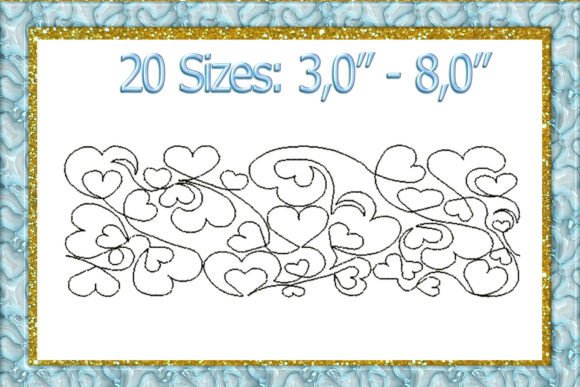
Review: Heart Border Embroidery Design for Craft Fairs
As an embroidery designer who has spent countless weekends behind a craft fair table, I have learned that not every digital file translates into a bestseller. We often get caught up in the technical perfection of a machine embroidery design, forgetting to ask the most important question: will this stop a shopper in their tracks? Today, I am reviewing the Heart Border Embroidery Design, specifically looking at its potential for turning raw fabric into high-demand craft fair products.
The product description promises a "flowing heart continuous line border" that is elegant and free-flowing. From a designer’s perspective, continuous line art is a double-edged sword. It can look incredibly sophisticated and modern, or it can look messy if the tension is off. However, for the handmade market, this style hits a sweet spot between rustic charm and contemporary minimalism. It feels soft, decorative, and universally appealing, which is exactly what you want when trying to attract a broad range of customers at a busy market.
First Impressions and Aesthetic Appeal
When I first loaded the Heart Border Embroidery Design into my software, the immediate impression was one of versatility. It does not scream "holiday specific," which means it has a long shelf life. It is not overly cute or childish, nor is it stiffly formal. Instead, it carries a gentle, romantic vibe that fits perfectly with the current trends in farmhouse and modern boho decor. For an Etsy seller or boutique maker, this aesthetic is gold. It suggests quality without being ostentatious.
The continuous line aspect is crucial here. In a crowded booth, customers scan items quickly. A complex, multi-color design might require them to stop and decipher the image. A flowing border, however, is understood instantly. It reads as "heart" and "border" immediately, allowing the brain to register the emotional connection—love, care, home—without effort. This instant recognition is vital for impulse buys.
Product Applications for Maximum Sales
The true test of any embroidery file is how it performs on actual goods. I evaluated this design across several common small shop products to see where it shines.
- Tote Bags and Market Bags: This is arguably the strongest application. Placing the Heart Border Embroidery Design along the bottom hem or across the top pocket of a canvas tote creates a balanced tote bag design. It frames the bag nicely without overwhelming the fabric. Customers love personalized, sturdy bags, and this border adds a custom feel that justifies a higher price point.
- Aprons and Tea Towels: For kitchen textiles, this design works beautifully as a trim. On an apron, running the border along the bib or the waistband adds a touch of elegance to a utilitarian item. For tea towel embroidery, it serves as a perfect finishing touch near the hem. Just be mindful of the fabric texture; waffle weave towels can sometimes distort fine lines, so a smoother linen or cotton blend is preferable for clarity.
- Pillow Covers and Pouches: As a focal point on a small zippered pouch or a lumbar pillow, the continuous line creates a sense of movement. It draws the eye across the product, encouraging the customer to pick it up and feel the texture of the stitches.
- Caps and Hats: Here, caution is needed. Curved surfaces are tricky for borders. If the hoop size allows for a small version, it could work on the brim or the back panel, but you must ensure the design does not distort when the fabric curves. I would recommend testing this extensively on scrap caps before committing to production.
Production Practicality and Batch Efficiency
For those of us running a commercial embroidery side hustle, time is money. The continuous line nature of this design suggests fewer thread breaks and color changes, which is a massive advantage for batch production. If you are preparing for a weekend fair, you need designs that stitch out reliably and quickly. This design appears to be optimized for speed without sacrificing visual impact.
However, we must discuss stitch density. Flowing lines can sometimes be too sparse, leaving the fabric visible in a way that looks unintentional, or too dense, causing puckering. Since the exact specifications are not provided in the brief description, I strongly advise checking the stitch count and density settings in your software. If the design is intended for lightweight fabrics like voile or thin cotton, you may need to adjust the density or use a cut-away stabilizer to prevent distortion. For heavier items like denim jackets or canvas totes, a tear-away stabilizer might suffice, but always test first.
Visual Merchandising and Online Presence
How does this design photograph? In person, the texture of the thread catches the light, adding depth to the simple line. For your Etsy listings or social media marketing, this design lends itself well to flat-lay photography. It creates a natural frame for other items in the photo. When creating a printable mockup or digital preview, ensure you show the design on various colored fabrics. High contrast is key; white thread on navy blue or black thread on cream linen will make the Heart Border Embroidery Design pop, while low-contrast combinations might cause the details to get lost.
Consistency is also vital for brand building. Using this same border across a collection—on totes, aprons, and pillows—creates a cohesive look for your booth. Shoppers recognize the pattern, which reinforces your brand identity. It signals that you are a professional design assets creator who cares about a unified aesthetic.
Designer Notes and Careful Use
Before you launch this as a flagship handmade product, consider these practical tips:
- Test on Scraps: Never run a new design directly on your final product. Stitch it out on the same type of fabric and stabilizer combination you plan to sell. Check for puckering or thread breaks.
- Thread Contrast: Because this is a single-line or continuous style, the choice of thread color is critical. Metallic threads can add a premium feel but may be harder to stitch smoothly. Matte cotton threads offer a rustic, organic look that appeals to the farmhouse demographic.
- Size Matters: Ensure the design retains its clarity at smaller sizes. If you shrink it too much for a small patch, the continuous line might merge into a blob. Verify the minimum viable size in your embroidery software.
- Licensing Check: Always confirm the license terms of the digital embroidery file. Ensure you have the right to use it for finished product sales, especially if you are selling on multiple platforms like Etsy and local markets.
In conclusion, the Heart Border Embroidery Design is a strong contender for any maker looking to expand their Borders category. It balances elegance with simplicity, making it accessible to a wide audience while remaining stylish enough to command a fair price. By paying attention to fabric choice, stabilizer selection, and strategic placement, you can turn this simple digital file into a standout star of your next craft fair.